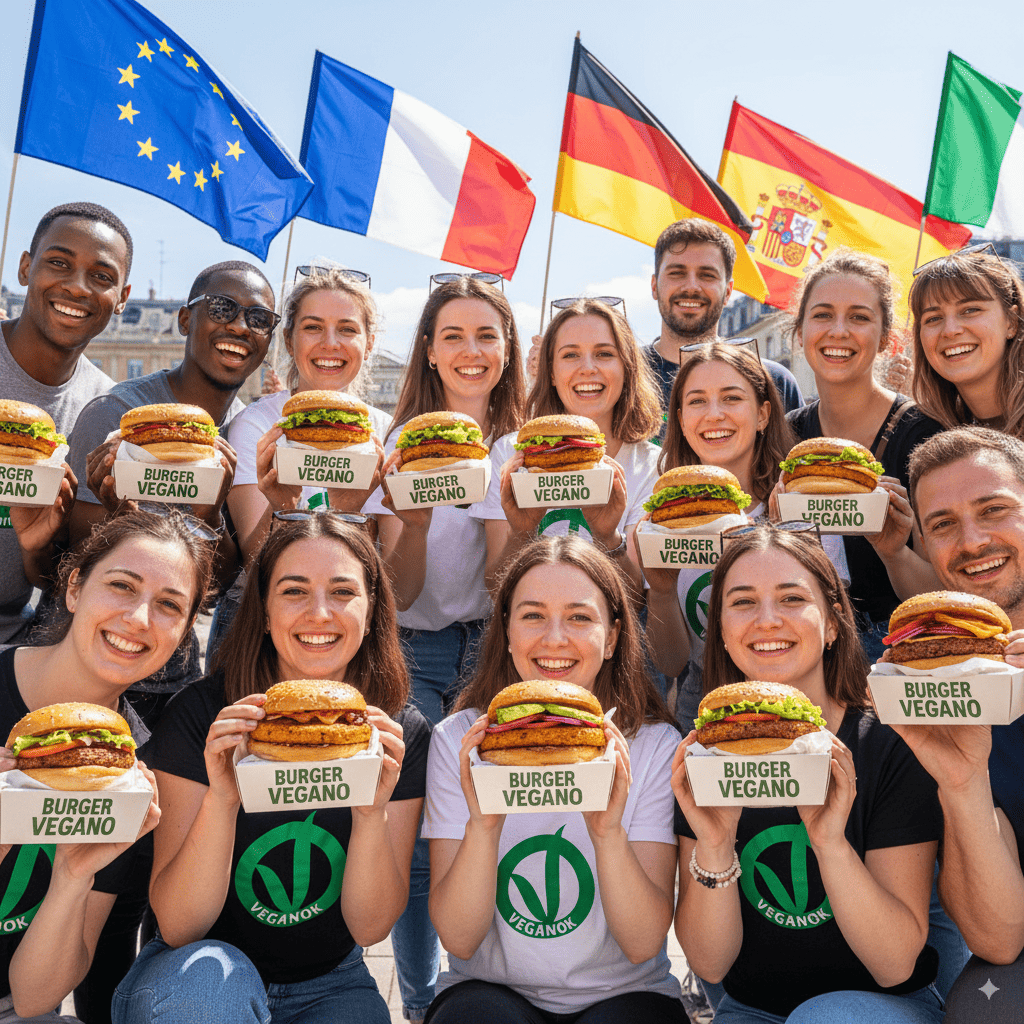
Vegan burgers are once again facing a challenge. On 8 September 2025, the European Parliament’s agriculture committee voted in favour of an amendment that may significantly impact the plant-based food sector. With 33 votes in favour, 10 against, and five abstaining, MEPs supported French politician Céline Imart’s proposal to ban the use of meat-related terms such as “burger” and “sausage” on vegan products.
UNIVEGAN and VEGANOK—representing hundreds of certified Italian companies—are actively responding. Through SAFE (Safe Food Advocacy Europe), they are bringing their case to Brussels to defend what they describe as “a basic consumer right: clear and transparent labelling.”
UNIVEGAN and VEGANOK: on the frontline for consumers
UNIVEGAN, the non-profit initiative launched by VEGANOK, represents hundreds of certified Italian businesses that bring the excellence of Italian plant-based products to global markets. For years, it has worked in Brussels alongside SAFE, ensuring both entrepreneurs and consumers in the vegan sector have a voice in EU decision-making.
This is not our first battle. UNIVEGAN has already chaired a board in Brussels on the legal meaning of the term “vegan,” helping to establish the European Vegan Standard, which is now a benchmark for international organisations. The standard, available at www.veganstandard.eu, was created precisely to protect both businesses and consumers.
Today, the stakes are even higher: the right of European citizens to transparent food labelling.
The amendment: a lobby-driven assault
Amendment 645, part of the revision of the Common Market Organisation Regulation, leaves little ambiguity: “Terms and names relating to meat covered by Article 17 of Regulation (EU) No 1169/2001 and currently used for meat and meat cuts shall be reserved exclusively for the edible parts of animals.”
The list specifically includes terms such as “steak,” “escalope,” “sausage,” “burger,” and “hamburger.” The ban would also be applicable to lab-grown products.
UNIVEGAN characterizes this as an unjustified limitation on food terminology—an outdated measure lacking commercial rationale that would ultimately disadvantage European companies in the international marketplace.
The facts don’t add up
For years, UNIVEGAN has documented through the Osservatorio VEGANOK that no evidence supports claims of consumer confusion. Rafael Pinto of the European Vegetarian Union concurs: “There is no data to suggest consumers are misled by terms like burgers or sausages on plant-based alternatives.”
The figures back this up. For example, a 2020 study by the European Consumer Organisation found that 80% of survey participants think plant-based products should be allowed to use meat-related names. In 2023, the Smart Protein survey, conducted in nine EU member states, reported that only 9% of participants said they struggled to recognize plant-based meat alternatives.
The truth is that this bill goes against consumer rights and the interests of hundreds of companies, including those represented by UNIVEGAN.
A familiar battle
This is far from the first attempt to police plant-based labelling. Italy has already witnessed the damage caused by similar restrictions on terms such as “plant-based milk”. UNIVEGAN insists that consumers deserve straightforward terminology. Forcing companies to adopt obscure, convoluted names not only generates confusion but undermines transparency.
Particular attention is on vegan cheeses and meat substitutes – burgers, sausages, steaks, meatballs – which VEGANOK-certified companies produce to high Italian standards.
At odds with Europe itself
The irony is hard to ignore. This proposal directly contradicts a ruling by the Court of Justice of the European Union last year, which found that member states could not prevent companies from using these terms on vegan labels, given existing consumer protection laws.
It also undermines the EU’s own climate and food security ambitions. Only last week, the European Academies’ Science Advisory Council (EASAC) urged lawmakers to strengthen support for meat alternatives in the interests of climate, health and sustainability.
UNIVEGAN asserts that primary beneficiaries of the proposal are within the livestock sector. Several member states have advocated for restricting plant-based labelling. The proposal is positioned as “strengthening farmers’ position in the food chain,” yet it serves established sectoral interests.
Ivo Rzegotta of the Good Food Institute Europe sums it up: “Arbitrary interference in established labelling practices, like those under discussion in Europe, would make it harder for consumers to navigate the market and would harm national businesses.”
UNIVEGAN’s response: action, not just words
UNIVEGAN is stepping up its efforts in Brussels, working with SAFE to present scientific data and technical arguments that dismantle the case for a ban.
Immediate measures include:
- Mobilising hundreds of VEGANOK-certified companies to ensure Italy’s voice is heard in the European Parliament.
- Coordinating with SAFE to deliver evidence-based counterarguments.
- Applying pressure through long-standing Brussels networks.
- Informing the public through the Osservatorio VEGANOK.
The consequences of stepping back
This debate is not about semantics. The implications reach far beyond labelling:
European innovation: Europe is the world’s largest market for plant-based foods. Restrictive labelling could jeopardise its leadership in a fast-growing sector.
Plant-based farmers: Contrary to claims, the ban would harm farmers producing key crops such as peas and soy.
Consumer transparency: Requiring companies to use unfamiliar terminology could obscure meaning and reduce clarity for consumers.
Sustainability goals: The proposal undermines the EU’s commitment to diversify protein sources and expand domestic plant-protein production.
A more conservative Parliament
The political context also matters. A more conservative European Parliament than in 2020 could now reverse the earlier rejection of a similar proposal. The amendment will next face a vote in plenary, likely in October, before proceeding to trilogue negotiations between Parliament, Council, and Commission.
Other parliamentary committees, covering consumer protection, the environment, food safety, health, industry, and energy, still have the opportunity to oppose the measure.
“This is about the future of food in Europe”
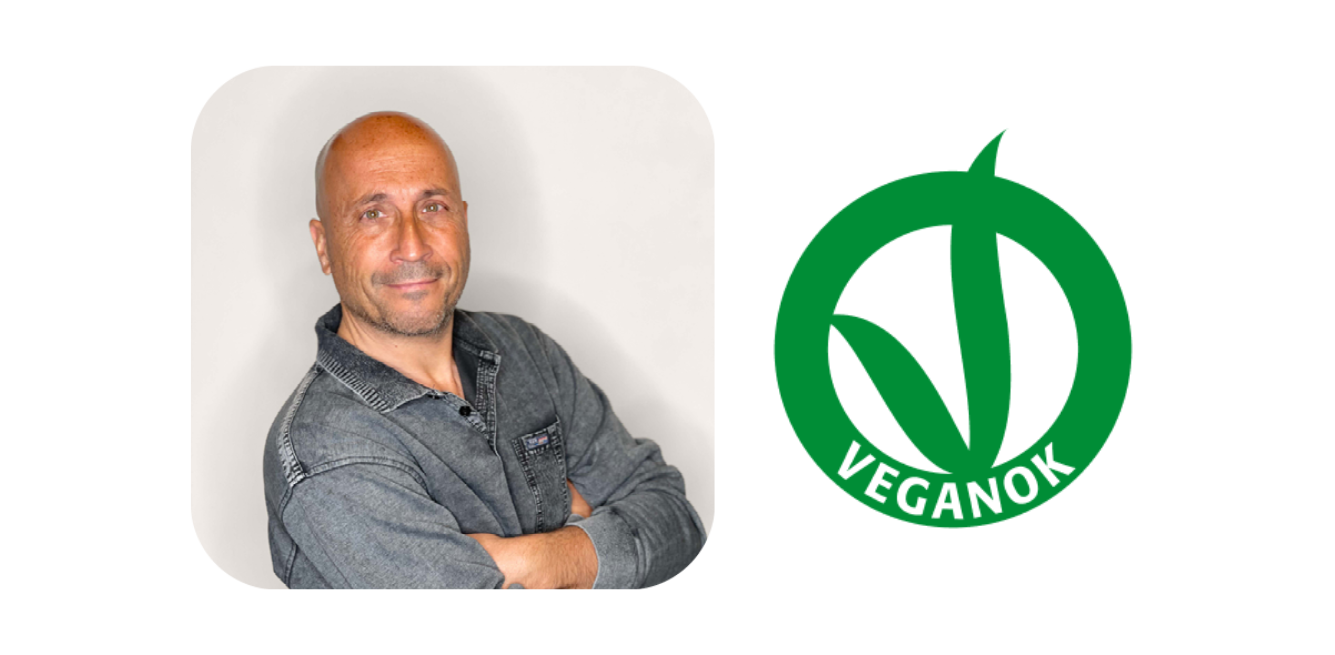
For Sauro Martella, founder of VEGANOK, the issue could not be clearer:
This proposal represents everything wrong with Europe’s approach to food innovation. It prioritises entrenched lobbies over consumer needs and ignores science in favour of protectionism. It blocks progress towards a more sustainable food system. As a vegan movement, we must mobilise. We must remind our representatives in the European Parliament that citizens are not confused by vegan burgers – they welcome them. Europe has the chance to lead the world in building a sustainable future. It would be tragic to throw it away in order to defend an industry of the past at the expense of the planet’s future.”
The battle over Europe’s food future has only just begun. And we cannot afford to lose it.