

VEGANOK is drawing a line under “plant-based” ambiguity. Here’s why.
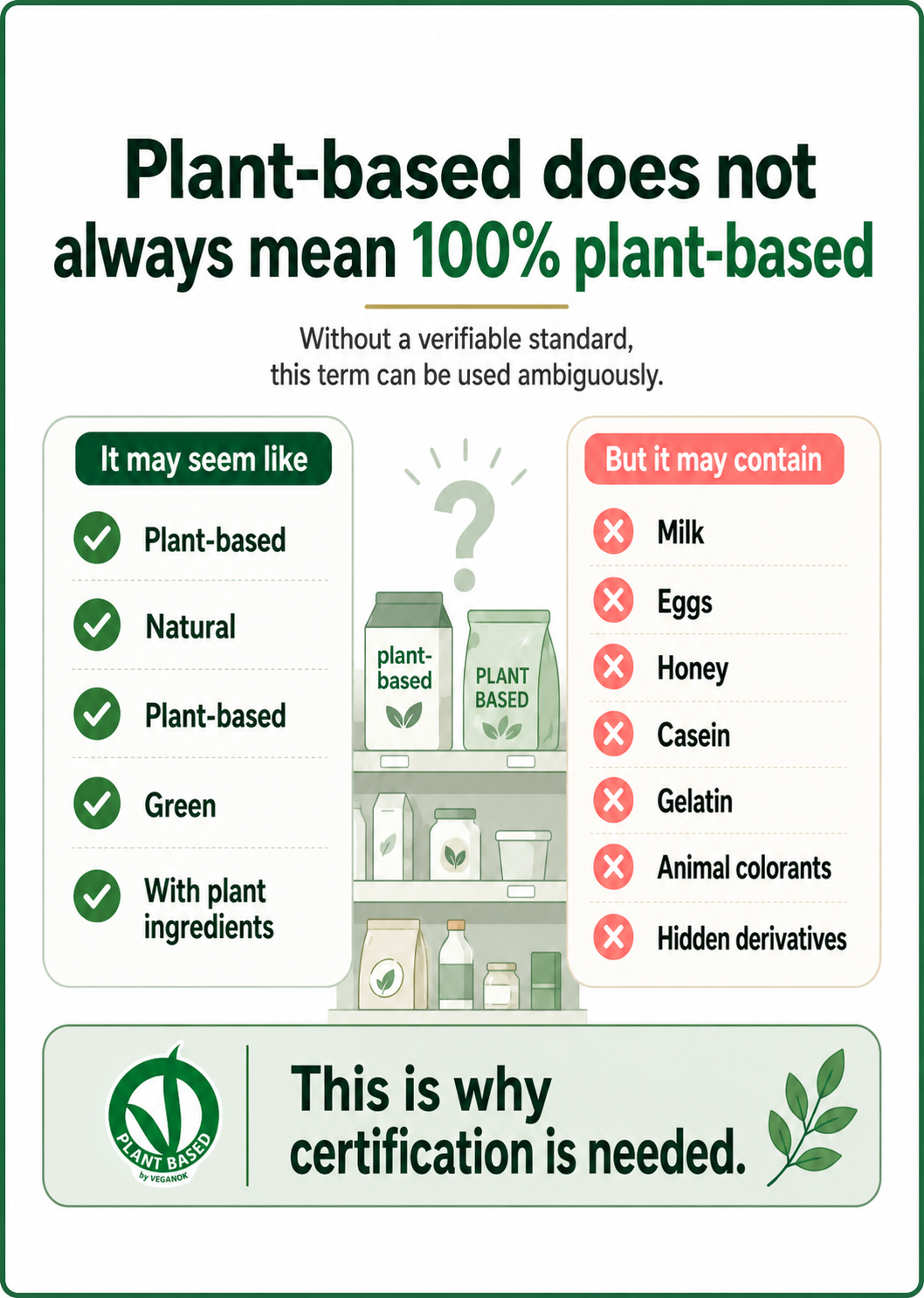
Walk into any supermarket. Scan the shelves. The word plant-based is everywhere: on drinks, snacks, cosmetics, supplements. It seems to say everything. In most cases, it guarantees nothing.
“Plant-based” products that contain milk, eggs, honey. “Plant-based” formulations that hide animal gelatines, casein, animal-derived colorants. This isn’t always deliberate: often it’s simply what happens when a term has never had a certified, verifiable definition; until now.
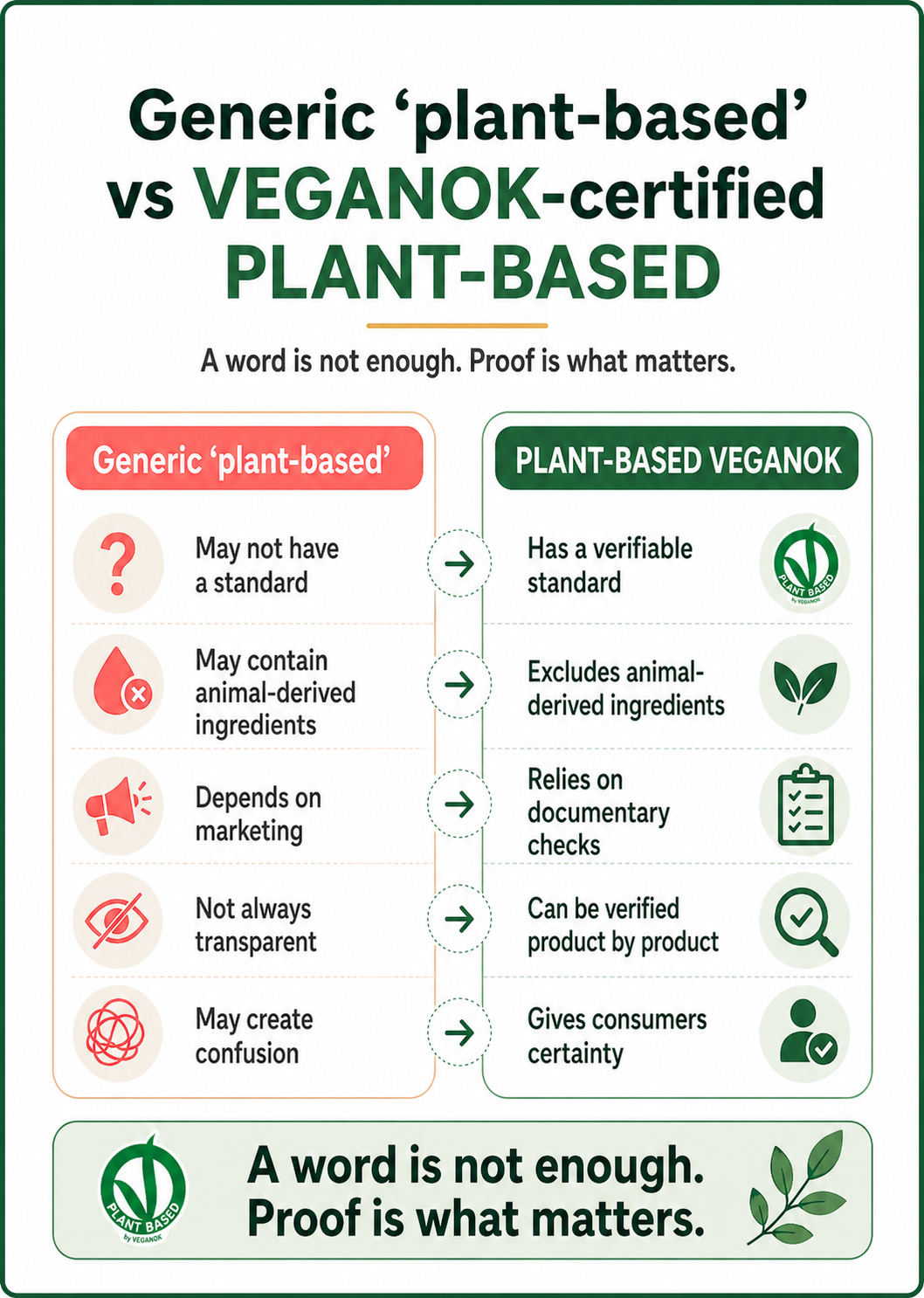
Without any agreed standard, “plant-based” can mean “contains some plant ingredients”. It can mean “less meat than before”. It can mean whatever the marketing department wants it to mean that day.
VEGANOK has watched this happen for years. Now it’s doing something about it.
The PLANT-BASED mark: a word that finally means something

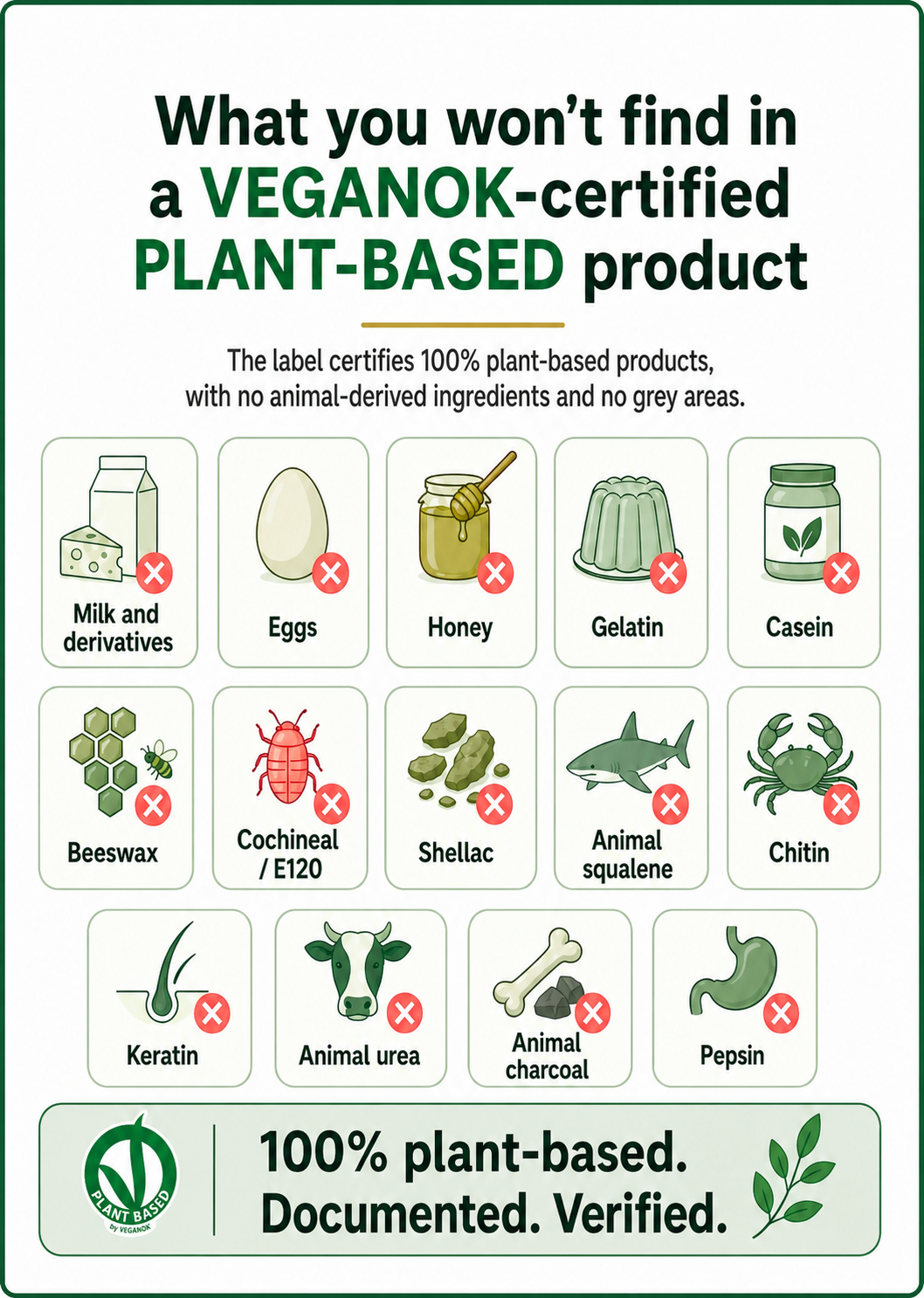
VEGANOK’s PLANT-BASED mark certifies exactly one thing and leaves no room for doubt: any product carrying it is 100% plant-derived. No animal derivatives. No grey areas. No ingredient that implies, directly or indirectly, the killing, confinement, or exploitation of animals.
“We built VEGANOK on precision,” says Sauro Martella, VEGANOK‘s founder. “In certification, there’s no middle ground: a product is either vegan or it isn’t, either 100% plant-based or it isn’t. When we saw ‘plant-based’ become a meaningless badge slapped on products with no real claim to the name, we knew it was time to act. The PLANT-BASED mark exists to restore the real meaning of those two words and to put that certainty in the hands of consumers and businesses alike.”
What’s really in that “plant-based” product?
The VEGANOK PLANT-BASED standard rules out not just the usual suspects — honey, beeswax, casein, gelatines, eggs — but also ingredients that rarely make it into the conversation: shellac, animal-derived squalene, cochineal (E120), chitin, animal urea, animal charcoals, pepsin, and keratin.
Even dual-source additives — those that can come from either plant or animal sources depending on the manufacturer — must be backed by concrete documentation. Companies are required to demonstrate, through proper certification, that the source is exclusively plant, mineral, or synthetic. No assumptions. No goodwill gestures. Only verifiable proof.
For alcoholic products, the mark also rules out animal-derived fining agents such as albumin, isinglass, and casein — ingredients that never appear on the label but play a role in production.
How it works: certified transparency, product by product
The PLANT-BASED mark applies to individual products, not to the company as a whole. Every label is examined and approved by VEGANOK before going to print: nothing reaches the shelf without official sign-off.
Once certified, each product is listed on veganok.com in a directory that is kept current and open for anyone to check. Because transparency only counts if it can actually be verified.
For consumers, certainty at last
The PLANT-BASED mark isn’t just for seasoned vegans who can read an ingredient list in their sleep. It’s for everyone: for anyone just starting to explore plant-based options; for those cutting back on animal products without wanting to spend hours parsing acronyms and chemical names; for anyone who needs a trustworthy reference point in a market that’s growing fast but isn’t always growing honestly.
For businesses, it’s a genuine opportunity to stand out: using “plant-based” with real rigour — and being able to back it up — is a meaningful competitive advantage in a world where consumers are paying closer attention and growing less willing to take marketing claims at face value.
VEGANOK gives “plant-based” its meaning back
From now on, when you see VEGANOK‘s PLANT-BASED mark on a product, you know exactly what you’re buying. Not “mostly plant-based”. Not “with fewer animal ingredients”. One hundred per cent plant-based, certified, verified, transparent.
That’s what we mean when we say plant-based should actually mean something.
Are you a company using claims like “vegan”, “plant-based”, or “sustainable”? The rules are changing. Read our guide to the new anti-greenwashing regulations and find out how to protect your business —and set yourself apart.
EU Anti-Greenwashing Directive: VEGANOK ensures clear and compliant communication